

For a single filer earning $40,000 to $100,000 in 2026, about 14% to 21% of each paycheck goes to federal taxes: 7.65% for Social Security and Medicare, plus roughly 6.5% to 13% for federal income tax. State income tax adds nothing in 9 states and a few percent in most others.
A $60,000 earner in Texas has about 16% taken out. Move the same job to Pennsylvania and it is about 19%. Below we show exactly where every dollar goes, with the 2026 IRS numbers and the math written out, so you can check your own pay stub in about five minutes.
What taxes come out of your paycheck?
Up to five taxes can come out of a US paycheck. Two are percentages fixed by law; the rest depend on you.
| Tax | 2026 rate | Limit | Who sets the amount |
|---|---|---|---|
| Federal income tax | 10% – 37% brackets | None | Your W-4 and the IRS tables |
| Social Security | 6.2% | First $184,500 of wages | Fixed by law (employer pays 6.2% too) |
| Medicare | 1.45% | No cap; +0.9% over $200,000 | Fixed by law (employer pays 1.45% too) |
| State income tax | 0% – 13.3% | Varies | Your state |
| Local income tax | Varies | Varies | Some cities and counties |
How much federal income tax is taken out of my paycheck?
Federal income tax is the only big number that changes from person to person. Your employer works it out from the Form W-4 you filled in, your pay, and how often you are paid. The calculation starts by removing the standard deduction, which for 2026 is $16,100 for single filers and $32,200 for married couples filing jointly. Only what is left is taxed, using these brackets:
| Rate | Single | Married filing jointly |
|---|---|---|
| 10% | $0 – $12,400 | $0 – $24,800 |
| 12% | $12,401 – $50,400 | $24,801 – $100,800 |
| 22% | $50,401 – $105,700 | $100,801 – $211,400 |
| 24% | $105,701 – $201,775 | $211,401 – $403,550 |
| 32% | $201,776 – $256,225 | $403,551 – $512,450 |
| 35% | $256,226 – $640,600 | $512,451 – $768,700 |
| 37% | Over $640,600 | Over $768,700 |
How much Social Security and Medicare tax comes out?
This part is simple: 7.65% of your gross pay, every paycheck. That is 6.2% for Social Security and 1.45% for Medicare. Two details matter at higher incomes:
- Social Security stops once your wages for the year pass $184,500 in 2026, so high earners see bigger checks late in the year.
- Once one employer has paid you more than $200,000, it must withhold an extra 0.9% Additional Medicare Tax. When you file, the threshold is $200,000 for single filers, $250,000 for married couples filing jointly and $125,000 if married filing separately.
So a $1,000 paycheck always has $76.50 of FICA taken out. Pre-tax 401(k) contributions lower your income tax, but not FICA.
How much state income tax is taken out?
It depends entirely on where you work and live. Nine states do not tax wages: Alaska, Florida, Nevada, New Hampshire, South Dakota, Tennessee, Texas, Washington and Wyoming. (Washington taxes some capital gains, but not paychecks.) Everywhere else, state tax usually adds a few percent. A few examples of 2026 rates from the Tax Foundation:
| State | Rate |
|---|---|
| Pennsylvania | 3.07% flat |
| North Carolina | 3.99% flat |
| Illinois | 4.95% flat |
| Georgia | 5.19% flat |
| New York | 3.9% – 10.9% |
| California | 1% – 13.3% |
What percentage of my paycheck goes to taxes? (2026 examples)
Here is the same $60,000 salary, paid every two weeks, in a state with no income tax and in a flat-tax state. We assume a single filer, a standard W-4 and no pre-tax deductions.
- Gross pay per check
- $2,307.69
- Federal income tax: 10% × $12,400 + 12% × $31,500
- $5,020 / yr
- Social Security (6.2%)
- $3,720 / yr
- Medicare (1.45%)
- $870 / yr
- Texas: total taxes
- $9,610 (16.0%)
- Texas: take-home per check
- $1,938.08
- Pennsylvania: add 3.07% state tax
- $1,842 / yr
- Pennsylvania: total taxes
- $11,452 (19.1%)
- Pennsylvania: take-home per check
- $1,867.23
And here is how the federal share grows with income, for single filers in a state with no income tax:
| Salary | Federal income tax | FICA (7.65%) | Total share | Take-home every 2 weeks |
|---|---|---|---|---|
| $40,000 | $2,620 | $3,060 | 14.2% | $1,320.00 |
| $60,000 | $5,020 | $4,590 | 16.0% | $1,938.08 |
| $100,000 | $13,170 | $7,650 | 20.8% | $3,045.38 |
2026 calculator
How much tax comes out of your paycheck?
Take-home per paycheck
$1,938.08
from $2,307.69 gross · 16.0% of your pay goes to taxes
- Federal income tax
- $193.08
- Social Security (6.2%)
- $143.08
- Medicare (1.45%+)
- $33.46
- State income tax
- $0.00
- Total taxes per check
- $369.62
Your top federal bracket: 12% · Effective federal income tax rate: 8.4%
Estimate using 2026 IRS brackets, the standard deduction and an annualized method. Your employer uses IRS withholding tables and your W-4, so real paychecks can differ by a few dollars. Local taxes, credits and other deductions are not included.
How to calculate the taxes on your paycheck (step by step)
- Start with gross pay per check and multiply by your number of paychecks a year (26 if paid every two weeks).
- Subtract pre-tax deductions such as traditional 401(k), HSA and most health-insurance premiums.
- Subtract the standard deduction ($16,100 single, $32,200 married filing jointly in 2026), unless your W-4 says otherwise.
- Apply the brackets to what is left, one slice at a time, and divide by your number of paychecks.
- Add 7.65% of gross pay for Social Security and Medicare.
- Add state and local tax at your state's rate.
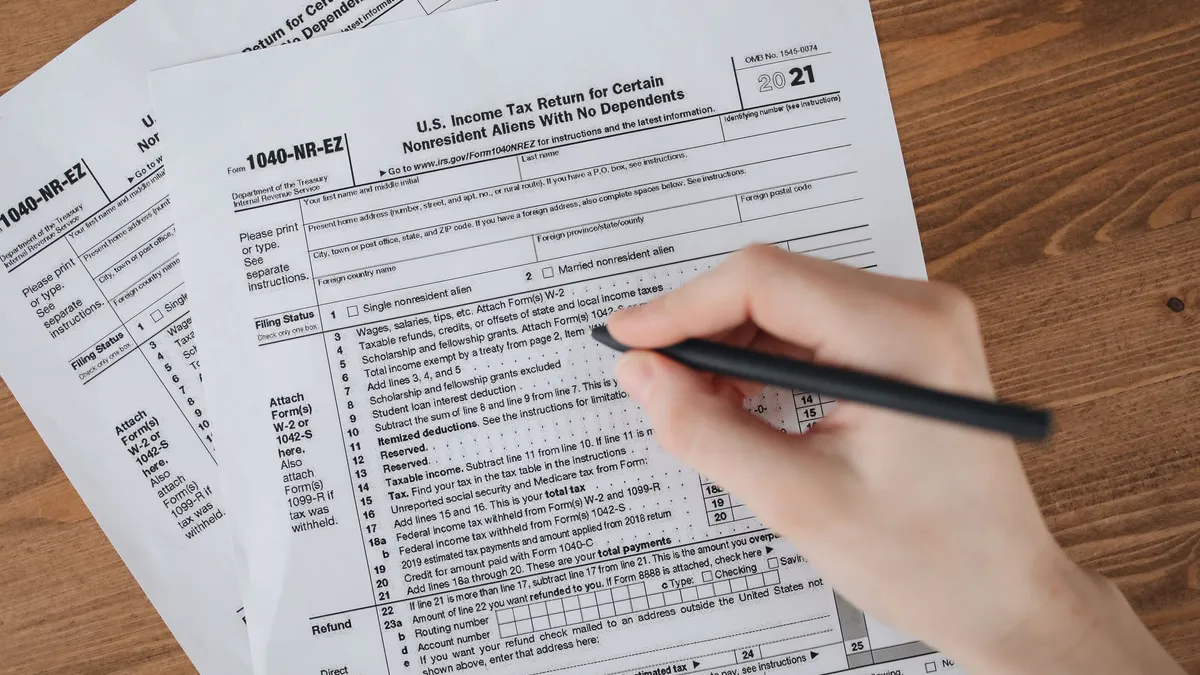
What changed for paychecks in 2026?
New federal deductions for 2025 through 2028 can cut your income tax, but they do not lower your withholding automatically. To see the savings in each paycheck instead of in a refund, you have to claim them on the new 2026 Form W-4 (Step 4(b) worksheet).
| Deduction | Annual limit | Income limit |
|---|---|---|
| Qualified tips | Up to $25,000 | Phases out above $150,000 ($300,000 joint) |
| Qualified overtime (the extra half) | Up to $12,500 ($25,000 joint) | Phases out above $150,000 ($300,000 joint) |
| Car-loan interest (qualifying new car) | Up to $10,000 | Phases out above $100,000 ($200,000 joint) |
| Age 65 or older | $6,000 per person | Phases out above $75,000 ($150,000 joint) |
How much tax is taken out of a bonus?
Most employers withhold a flat 22% federal from bonuses and commissions, plus the usual 7.65% FICA and state tax. A $5,000 bonus would have $1,100 of federal tax and $382.50 of FICA withheld. Bonus money above $1 million in a year is withheld at 37%. If your real rate is lower than 22%, you get the difference back when you file; this is why bonus checks look so small.
How to change how much tax is taken out of your paycheck
- Run the IRS Tax Withholding Estimator. It takes about 25 minutes with a recent pay stub and now includes the 2026 deductions.
- Give your employer a new W-4. It goes to your employer, not the IRS, and you can change it any time. Our guide on how much federal tax to withhold walks through each step.
- Contribute more pre-tax. A traditional 401(k) or HSA contribution lowers income tax on every check. See what that money could grow into in our guide to the average 401(k) balance by age.
- Decide what you want: a bigger refund (more withheld) or bigger paychecks (less withheld). Owing too much at filing time can trigger an underpayment penalty.
One related trap: money taken out of a 401(k) early is not taxed like a paycheck. It gets a flat 20% withheld and a possible 10% penalty, covered in our 401(k) early withdrawal penalty guide.
The bottom line
For most people, the percentages above land within a point or two of the real stub. If yours is way off, the W-4 is almost always the reason, and fixing it takes one form.